

Grange Park Primary
Early Years
Our ambitious early years curriculum is designed to give pupils, particularly the most disadvantaged, the knowledge, self-belief and cultural capital they need to succeed in life. Coherently planned and sequenced, it builds on what pupils know and can do, towards cumulatively sufficient knowledge and skills for their future learning. Our curriculum connection maps identify how areas of learning are developed across the year and linked to half-termly topics. Purposeful planning builds on prior learning and becomes increasingly challenging as the year progresses. We recognise that communication and language are the foundations of all learning; therefore, our environment is "language-rich," prioritising high-quality back-and-forth interactions to expand children’s oral vocabulary and narrative skills. Staff are experts in identifying "teachable moments," using commenting and questioning to model complex sentence structures and explicitly teaching tiered vocabulary.
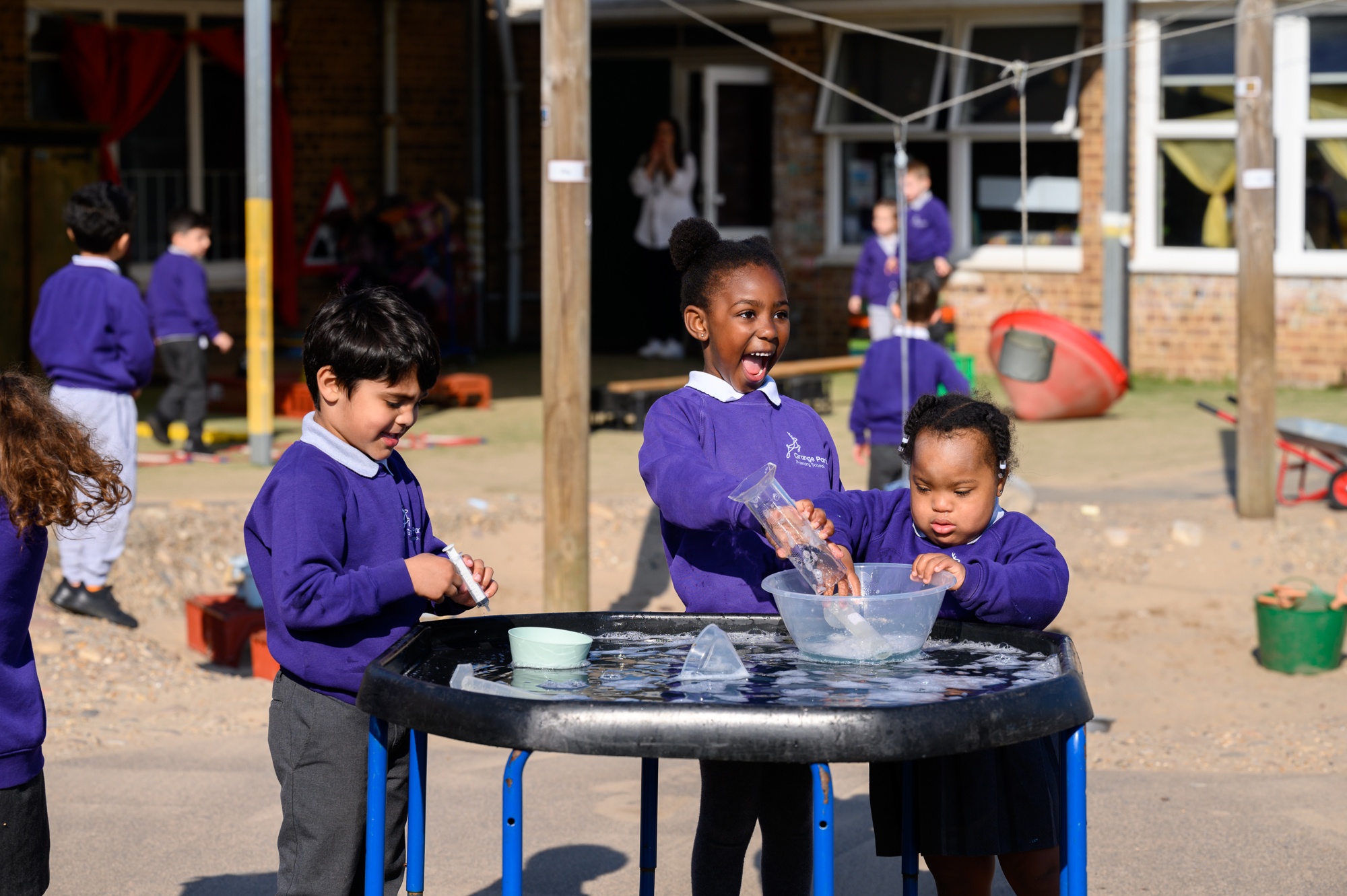
Our approach to teaching is enhanced by walk-thru strategies to help pupils remember more over time. This includes, low-stakes retrieval practice such as quick-fire games, finger rhymes to practise counting, and whole-class repetition of new vocabulary. These strategies are embedded within daily routines and deliberately spaced over time to strengthen neural connections through spaced repetition, ensuring that foundational knowledge is retained. We define this foundational knowledge as the essential building blocks—the facts, concepts, and vocabulary—that must be mastered as a prerequisite for more complex learning. These moments also provide key opportunities for high-quality interactions, where staff scaffold and support children’s recall.
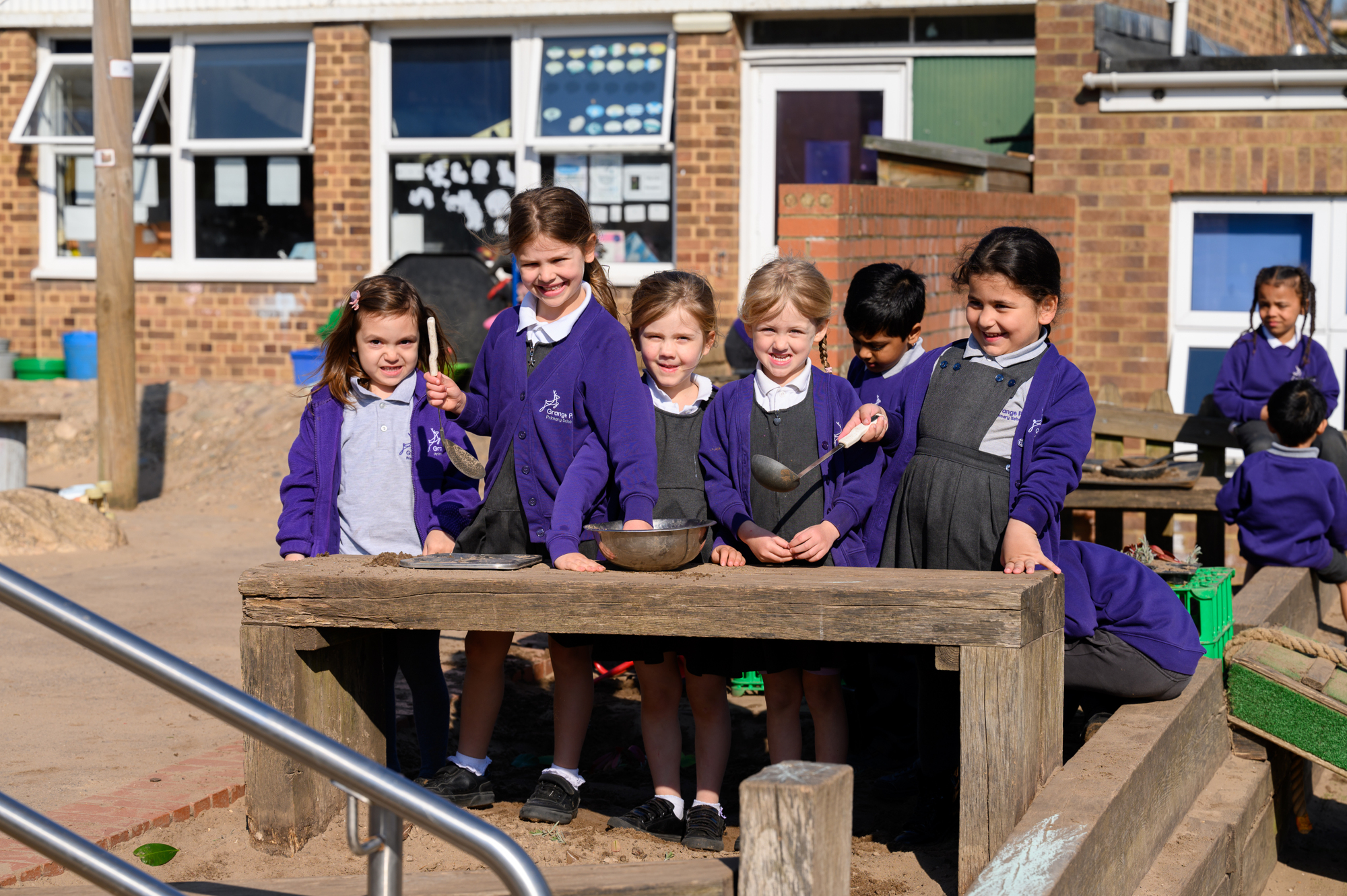
Provision across both the prime and specific areas of learning is carefully planned to enable all pupils to develop their personalities, talents and abilities. Continuous provision is dynamic rather than passive; resources are intentionally selected and arranged to provide meaningful opportunities to practise and embed key skills. This is underpinned by a commitment to high-quality interactions, with staff acting as active facilitators of learning. Through effective questioning, scaffolding and purposeful conversation, vocabulary is extended and understanding deepened, ensuring every interaction is a teaching opportunity.
Our approach to teaching early reading and synthetic phonics is systematic and ensures that all pupils learn to read words and simple sentences accurately by the end of Reception. We use Read Write Inc reading books that are carefully matched to the sounds children have been taught, building confidence and fluency. Phonics assessment data is reviewed half-termly to measure impact and inform targeted support and intervention, ensuring that any pupil experiencing difficulty is supported to catch up. A strong culture of reading is promoted through well-stocked class book areas and daily opportunities to enjoy high-quality stories and poems selected as part of our Reading Spine, which exposes children to the rich "book language" necessary for future literacy success.
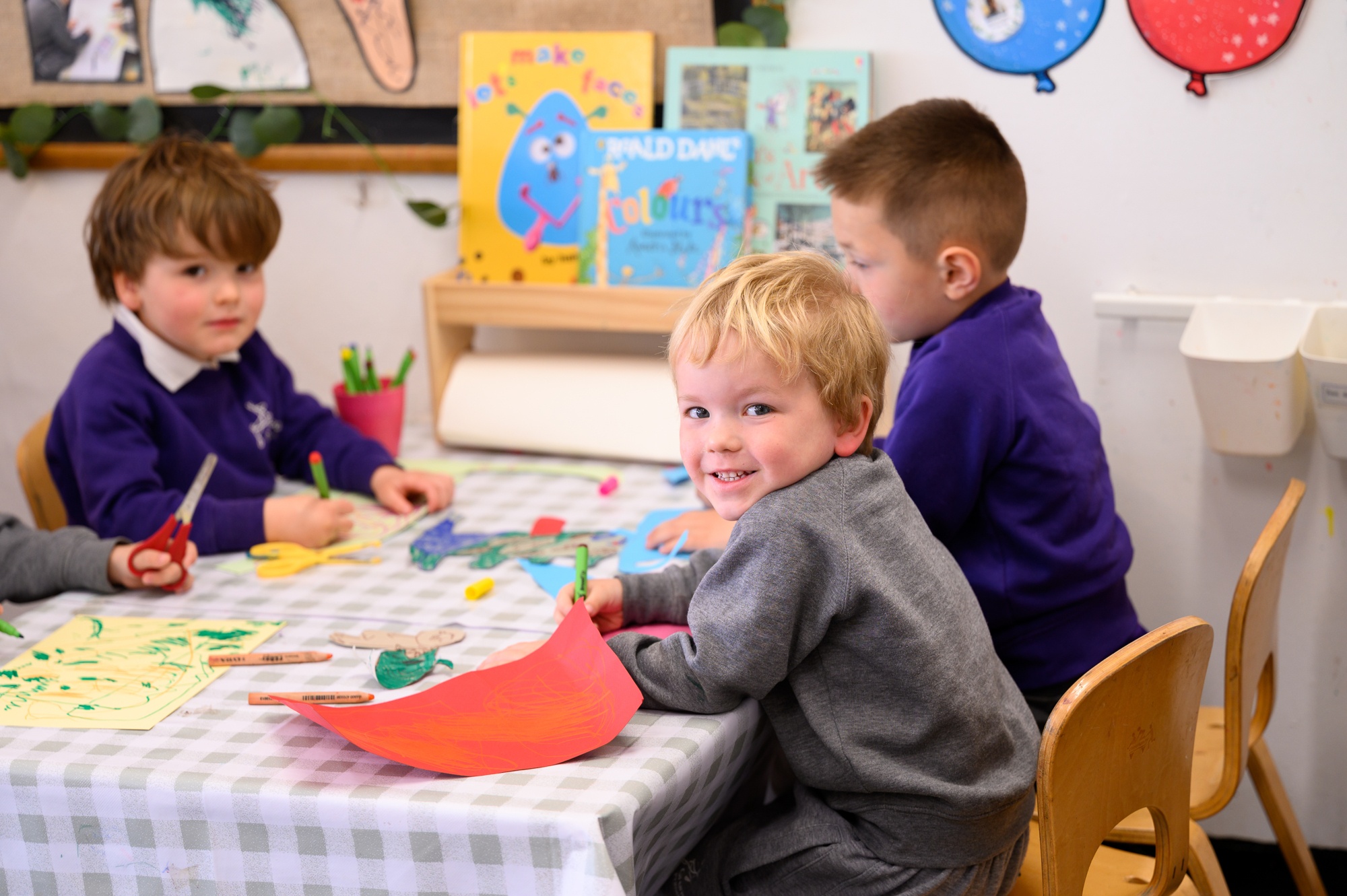
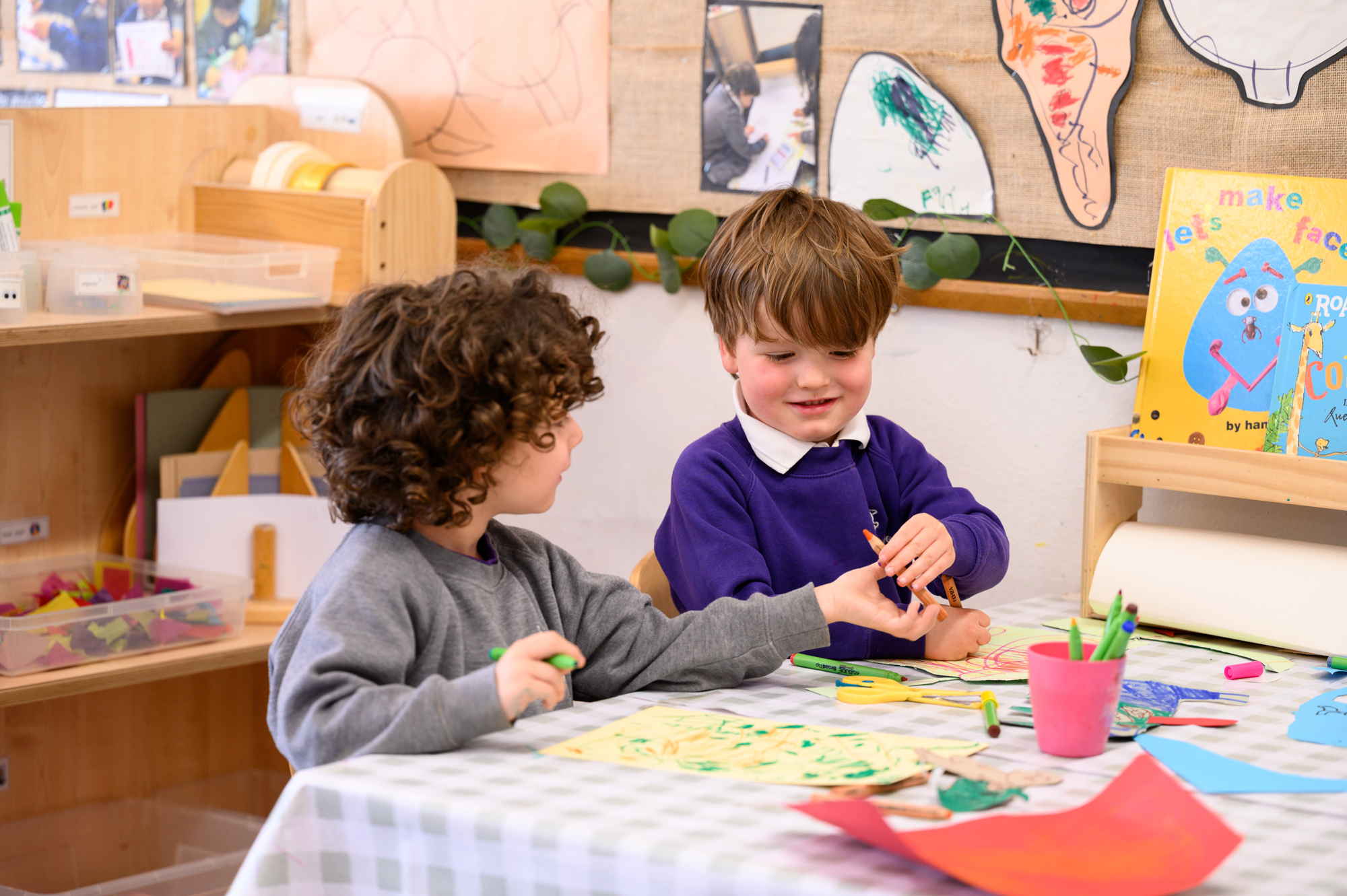
A range of strategies are used to support the teaching of writing, including actions, Read Write Inc strategies for spelling, talk, role play, drawings and shared storytelling. These approaches support pupils to develop storytelling language, sentence construction and vocabulary in preparation for writing. We recognise that physical development underpins early writing success and this is reinforced through Nelson Handwriting. There is a rigorous focus on foundational knowledge, with staff explicitly teaching the ‘Four Ps’ (Posture, Pencil grip, Paper position and Pressure) using ‘Ready to Write’ visuals to ensure physical readiness is secured before more complex writing tasks are introduced. Strength, balance and coordination are developed through physical activities such as threading, playdough and fine motor tasks, supporting children to hold a pencil effectively and develop early mark-making skills in preparation for writing.
A sharp focus on early mathematics ensures that pupils gain confidence, speed and proficiency when working with number. We prioritise a deep understanding of cardinality, ordinality, and the composition of numbers, ensuring children develop a "number sense" that goes beyond rote counting. Direct teaching of concepts and skills is given real-life context and purpose, often linked to half-termly topics, and supported through the use of everyday resources and manipulatives such as Numicon. Planned opportunities to practise and embed mathematical learning are provided both indoors and outdoors, while flashbacks and retrieval practice enable pupils to remember more over time.
Children are given opportunities to play and explore, be active learners and think critically. Our curriculum drivers of growth mindset, community, environment and language development are embedded throughout teaching and learning, supporting the development of the whole child. We believe that every child is unique, constantly learning, and capable of being resilient, confident and self-assured.